The People’s Republic of China (PRC) and I have always had a complicated relationship. She’s like that lady who likes to make her own rules and make everything difficult for some unknown reason, yet you still feel that you should give her a chance. After my debacle in ’15 upon returning from North Korea I return to the PRC armed with more research, wisdom, and fewer visa restrictions. It doesn’t mean that a trip here still isn’t a heartache. It was 35°C in Melbourne the other day, and temperatures in Harbin are going to be as low as -25° at night, meaning I’ll be subject to a 60° temperature differential during a period of less than a week.
I said back in ‘15 that if there isn’t a rule in China, they make one, and if there isn’t a problem, they create one. You’ll find yourself being asked for your passport nearly everywhere, from booking train tickets to visiting attractions like the Forbidden City. Changing money is still a complicated headache: you need your passport, must fill out about three pages of paperwork and then must wait about 30 minutes. Oddly, I couldn’t change euros since I had my US passport but thankfully, I had some American money with me. Thankfully it’s much easier these days to pay for stuff using a foreign credit card if you enter the details on WeChat before arriving. Access to Facebook, WhatsApp, Instagram, Google, and many other popular apps isn’t possible unless you’ve installed a VPN before arriving in China. The visa waiver has now been extended to 240 hours (10 days) for many nationalities but I still had to show my fight out of China (in this case, I’m going to Korea for a few days) within the 10-day period, and whilst, unlike before, you can now travel between the permitted regions, you still can’t go absolutely everywhere in China on the visa waiver. Visiting places like Tibet, Qinghai, Xinjiang, and Inner Mongolia still require a regular Chinese visa, which is expensive and bureaucratic.
A couple of days ago I landed in Beijing and stayed for the day, and then it was an 18-hour train trip to Harbin, the capital of Heilongjiang; the latter means “black dragon river.” Due to its proximity to Siberia, Harbin experiences bitterly cold winters, making it the perfect environment for the Harbin Ice and Snow Festival. Very, very few Chinese speak any English at all, and it was rather difficult not being able to talk to anyone on the 18-hour train journey. I love sleeping on a train, as it’s comforting when the train rocks back and forth as if you’re in a cradle. It was worth it to upgrade to a hard sleeper even if I got very little sleep, and I got a few stares since I was wearing shorts as the train pulled into Harbin. My CouchSurfing host in Harbin is a young man from Kenya, also named Christopher. He studies IT at one of the local universities. What I needed was a few glasses of soju and then a good sleep, and that’s exactly what I did. I woke up this morning refreshed, and I dressed up warm, putting on my thermals but putting my beanie, gloves, and extra socks in my backpack for later. It was cold but not bitterly cold this morning, so I walked instead of getting a taxi into central Harbin.
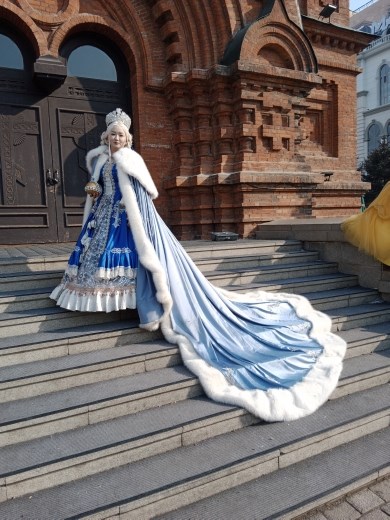
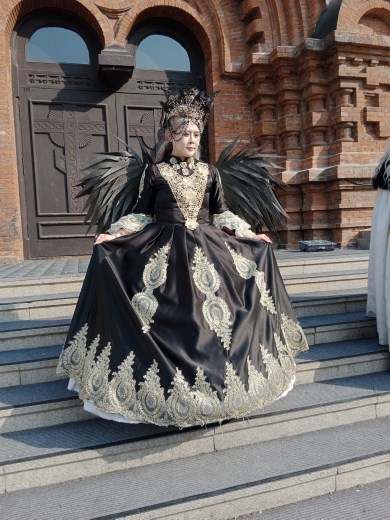
Harbin is a fascinating city. There’s a colourful old town and orthodox church, and a bit of Jewish history. More than 20,000 Jews lived in Harbin at one time. These girls are dressed in these colourful Russian orthodox dresses.
There’s a saying that the Chinese eat everything on four legs except the table, everything in the sea except the ship, and everything that flies except the airplane. It’s also true that they seem to eat everything on six legs, eight legs, and beyond. Ordering food (and going somewhere that serves something catered to a Westerner) is rather complicated, as it’s possible you may end up ordering something absurd like pork intestines, duck tongue, chicken feet, or beef liver. The Chinese may even eat whatever stands on two legs! For lunch I’d tuck into a beef hot pot.
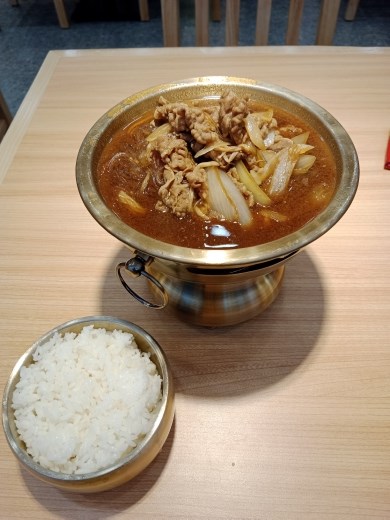
This is tasty and warming on a blustery day. Zhao Lin Park and its ice carvings would call my name next. Wow! I’ve never been anywhere like this.
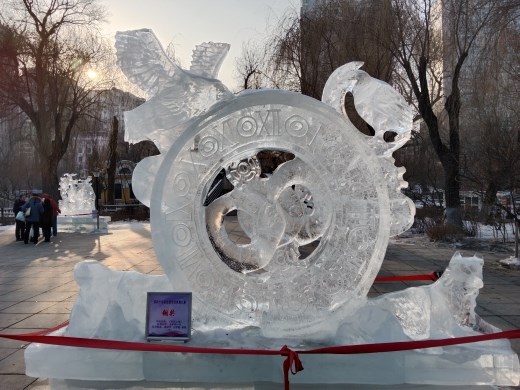
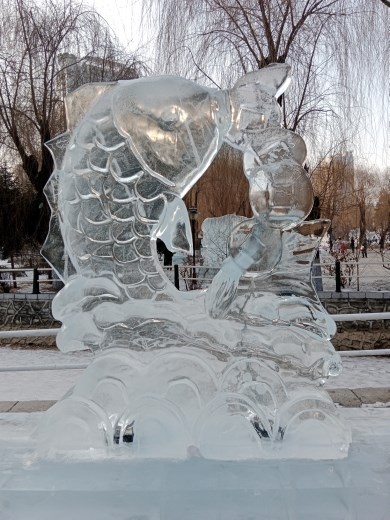
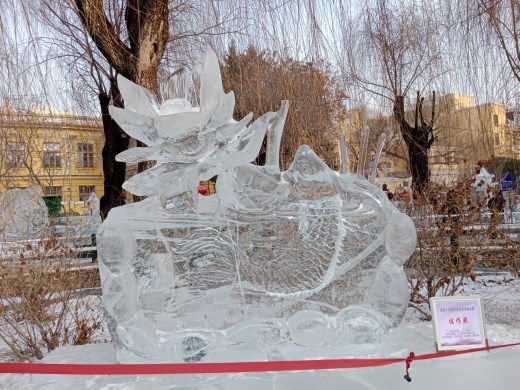
I called my mother and showed her the various sculptures carved in the shapes of motorcycles, insects, fish, faces, etc. and then showed her some Chinese families having a good time in the snow. A bit about each artist was on display along with the name of each sculpture. It’s easy to imagine a bucket of water or even a small pond being frozen in winter, but not the Songhua River, which is about 3 km wide. It’s frozen solid!
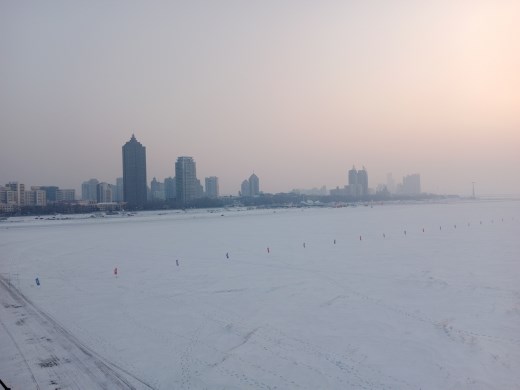
The ice used to carve everything in winter comes sawn in blocks cut from the Songhua River. As a prelude to what the Ice and Snow World will be like, the ice is illuminated at night. Last year in Melbourne I was given an Essendon Bombers scarf, and it will be very useful here. To all of my friends in Melbourne, I hope I’m supporting the right footy (Australian Rules Football) team.
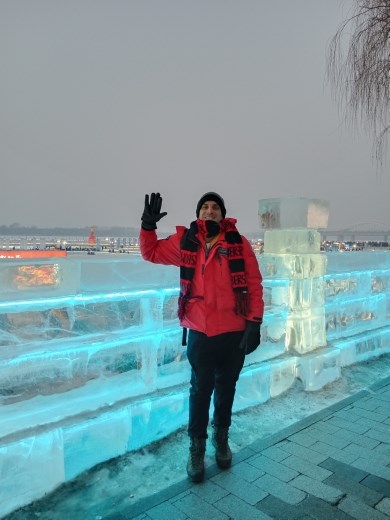
Harbin is so colourful at night. The Chinese are experts when it comes to colour.
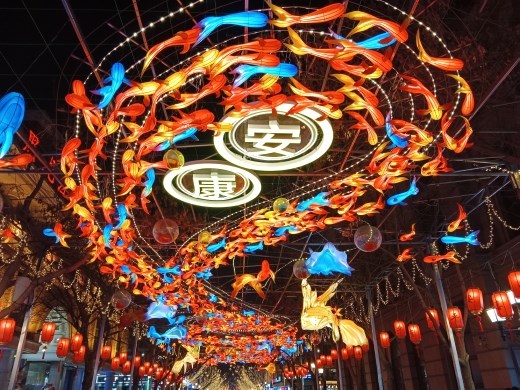
What a full on first day I had in Harbin. When I arrived home, I asked Chris if he could help me register with the police. When I was in China ten years ago, I was unaware that you’re supposed to register with the police within 24 hours of your arrival. If you stay at a hotel or hostel, it is automatically done for you but if you’re staying with friends, relatives, etc. you must go to a police office yourself to register. Since I’m in China for a longer period this time I’m taking the better safe than sorry approach. With six full days in Harbin, I have a lot to do but I must remember to bundle up…it’s gonna be cold tomorrow. Brrr!
