DURING A “WHILE WE’RE HERE” MOMENT we booked a trip to the Galapagos. We had visited the archipelago fifteen years ago, five days exploring the older eastern and southern islands. This time we’re on an 8-day trip on a luxury yacht and will concentrate on the younger, more distant Isabela and Fernandina Islands. Infinity might not be the most luxurious yacht in the Galapagos but it certainly dazzled us! The ship is 160-feet long—more than twice the size of Nemo II—and carries 20 passengers and about 15 crew members. Our stateroom is actually larger than a cabin on most cruise ships with a balcony and a huge shower. The meals have been approaching gourmet-status and the wine list, we have been told, is excellent.
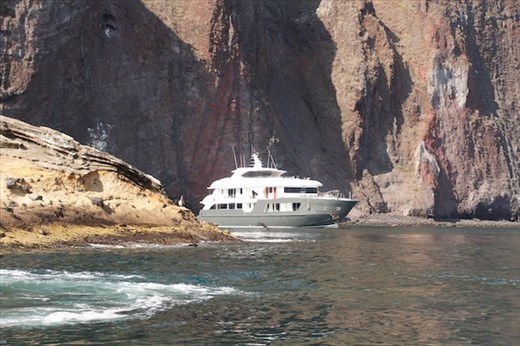
Infinity—our floating palace
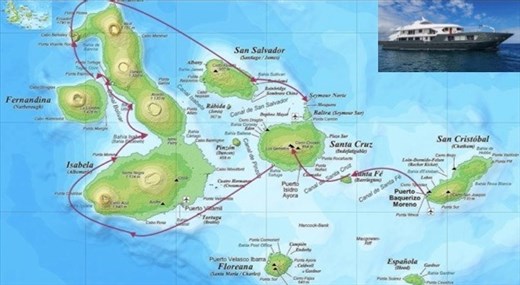
Our route through Paradise
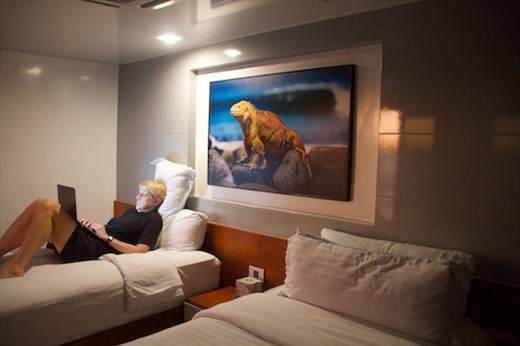
Luxury at Sea
The problem with returning to the Galapagos, despite the quantum leap in luxury of our ship, is that seldom do destinations improve with time. For four million years life on the islands evolved according to nature’s plan. The last four centuries have brought pirates and whalers, scientists like Charles Darwin and David Attenborough, settlers and tourists like us and all have left their mark. Travel around the islands is more regulated than before and the guides are much better trained.
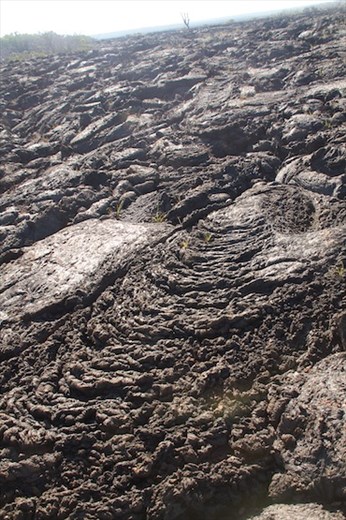
Pahoehoe lava
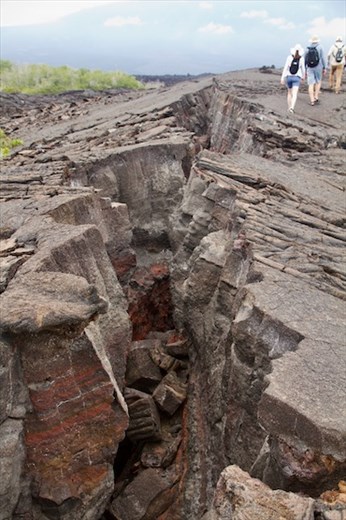
Beware, forces of Nature at work
The Galapagos are made up of 21 volcanoes and 13 of them are still active. While much of the islands are volcanic, huge portions of seabed have been raised up and eroded giving the islands a variety of color and shape. Plant life on the islands didn’t arise spontaneously—some floated in like the mangroves or drifted on air currents like dandelion seeds which over time evolved into forests of endemic Scalesia trees.
Three main types of cacti thrive on the islands—ubiquitous Prickly-pear, endemic Lava Cactus and towering Candelabra Cactus.
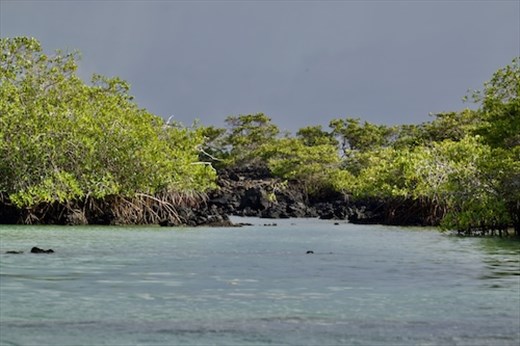
Mangrove seeds floated in from the mainland

Scalera forest, giant dandelions
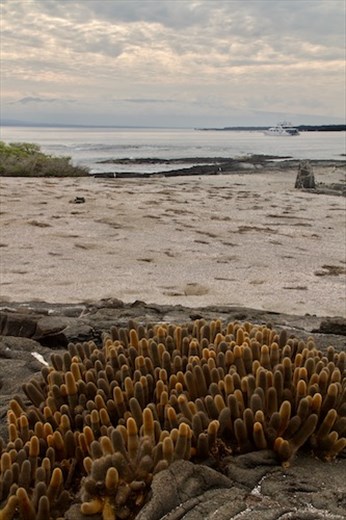
Lava Cactus
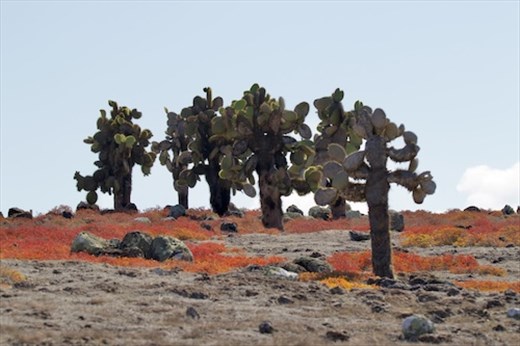
Prickly Pear and Carpet Weed
Darwin based his theory of Evolution on the plants and animals her found on the islands but that is only part of the story. Countless individuals from numerous species must have made it to the new islands but were unable to make a go of it. Natural Selection. What we see today are the descendants of the survivors.
