Before you climb onto an elephant's back, here's the truth about what you're endorsing.
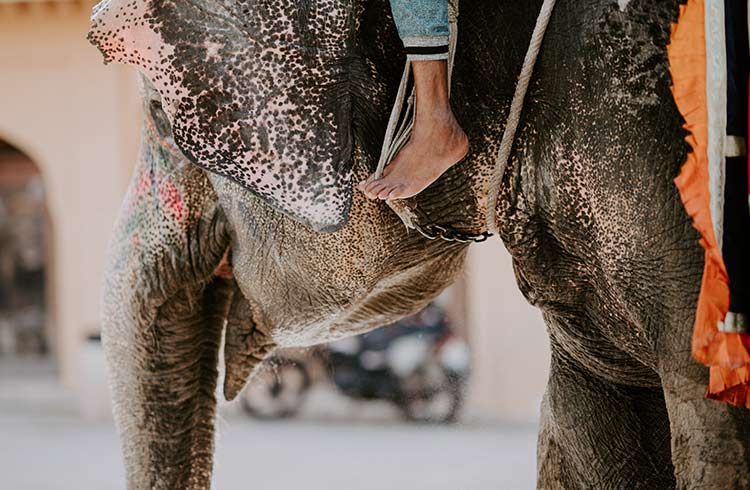 Photo © Annie Spratt
There might be a perceived air of romance about riding an elephant. Sitting atop its back as the giant animal slowly meanders along a white sand beach, or through rushing streams in the thick of the jungle. It’s the stuff great travel stories are made of.
But the truth is, riding elephants should be avoided. In the US, organizations, including the Humane Society of the US and the Association of Zoos and Aquariums, are against riding elephants because of the abuse the animals undergo when they are taught to carry people, as well as safety concerns.
Awareness of the harmful nature of the practice was raised by a World Animal Protection initiative in 2014, which highlighted the cruel conditions elephants are kept in.
“The results found that the welfare standards in most elephant venues that were assessed in Southeast Asia was quite poor,” says Intrepid Group’s Responsible Business Manager, Liz Manning.
“Over the past five years, media coverage on the issue has grown and an increasing number of travel companies have followed suit in removing these experiences from their trips-raising awareness amongst their customers” she adds.
- Why Are People Still Riding Them?
- Elephant Training
- Elephant Health
- Social Interaction
- Living Conditions
- Don't Believe Everything You Hear
- What Can You Do if You Don't Want to Ride Elephants?
- Then vs Now
Why are people still riding elephants?
For most, it's simply a lack of awareness. If everyone saw the videos of elephants being beaten with bullhooks or electric prods, it's doubtful they would still be keen to ride one. Aside from the abuse, there are a variety of reasons people should skip riding an elephant and opt for more humane ways to experience these creatures.
Here are a few more reasons to seek out an elephant sanctuary that doesn’t offer rides or circus tricks.
Simple and flexible travel insurance
You can buy at home or while traveling, and claim online from anywhere in the world. With 150+ adventure activities covered and 24/7 emergency assistance.
Get a quoteThe training
Phajaan, or elephant crushing, is a long-standing accepted tradition in Thai culture. This harmful training method is what elephants undergo to become part of the tourism industry. Young elephants are taken from their mothers and confined to a small place, then abused with bullhooks and bamboo sticks spiked with nails. They are also starved and deprived of sleep, in order to crush their spirits and become submissive to humans.
This is an accepted practice in Thailand, and many elephants you will see in trekking camps will have undergone this horrific process. However, this is not the only reason you should give elephant riding a miss.
Elephant health
Elephants' spines cannot support the weight of people and doing so all day can lead to permanent spinal injuries. There are further complications from having a chair (howdah) attached to their backs. This clunky contraption rubs on their backs, causing blisters that can become infected. In addition, wear and tear on the elephant’s feet after long-term trekking can cause foot infections and injuries.
Social interaction
Elephants are a lot like humans. They socialize, have families and friends, feel pain, sorrow and happiness. When they are in trekking camps, they are often not engaging with other elephants. In some camps, they live their lives essentially in solitary confinement.
Living conditions
Baby elephants are chained to their mothers during treks, which can cause them harm, as they must keep pace with their mother as she walks. These baby elephants can't stop to rest or nurse as they must continue trekking. To keep pace, the guide (mahout) will prod the elephants with a bullhook to keep them moving. The bullhook, which elephants remember from their torture during the phajaan, can immediately strike fear in them. This fear can trigger a reaction that can not only hurt the elephants but also the riders.
After the trek, the elephants are kept chained when they aren't working. They are not fed enough or given enough water. Many travelers have reported seeing elephants swaying, pacing and bobbing their heads at trekking camps – signs of serious psychological stress.
Don't believe everything you hear
If a tour operator offers anything other than spending time with elephants, you should avoid it. If an elephant 'sanctuary' or wildlife park offers elephant riding, circuses or painting shows, you can be certain the elephants have undergone horrific abuse to get them to where they are.
While some places might market their experience as humane and claim they don’t use bullhooks, the fact that the elephants are being used for trekking means they are being harmed.
What are the alternatives?
There are still lots of places where travelers can interact with elephants ethically, according to Liz.
“From 2020, on Intrepid’s Laos trips travelers can witness elephants roaming and swimming in their natural habitat at MandaLao, the first non-riding elephant sanctuary in the country. Intrepid’s non-profit The Intrepid Foundation is also raising funds to help the organization build a new night enclosure with mahout housing.
Many of our travelers to Thailand from 2020 will visit ChiangChill, a venue that used to offer interaction with elephants but has now moved to a new model, where visitors can observe the elephants from a safe distance, watching them graze and socialize.”
The Elephant Nature Park or Boon Lott’s Elephant Sanctuary in Northern Thailand are two reputable places where human–elephant interaction won't compromise the elephant’s safety.
Then vs now
As word spreads about the horrific truth behind elephant riding, tour operators and national parks around the world are taking a stance. In Vietnam, Yok Don National Park has stopped offering elephant rides, instead encouraging travelers to simply observe elephants in their natural habitat. In Nepal, Chitwan National Park ended elephant-back tours, instead using them as walking guides through the park.
In 2016, TripAdvisor stopped promoting operators that offer elephant rides as an activity, to take a stance on the cruel treatment. In 2018, Instagram banned the ability to search hashtags related to unethical wildlife tourism, as a method of educating users about the issues. A message about protecting wildlife, with a button to 'Learn more' now appears if you try to search hashtags such as, #koalaselfie, #elephantriding, #slothselfie, and more.
More than 200 companies have removed elephant riding from their itineraries since 2014. But, according to Intrepid Travel’s Liz Manning, there’s still a lot more to be done.
“To encourage more businesses to follow suit, travelers should choose to visit places with limited or no physical interaction with the elephants. World Animal Protection has a great elephant-friendly checklist which includes venues that have the highest level of care for their elephants.”
To find out more about high-welfare elephant tourism businesses, see the World Animal Protection’s elephant-friendly checklist which includes Thailand, Cambodia, India, Nepal, Sri Lanka and Laos.
Here are a number of other wildlife experiences you should avoid on your next adventure.
*This article was originally written by Diana Edelman, who spent a week volunteering at the Elephant Nature Park in Thailand in 2010.
41 Comments
Make up your own minds about whether you want to ride an elephant or not but at least get all the facts first.<br><br>This 'article' is just someones opinion of their own experience. It is neither right or wrong. However I do think when you're on a public platform such as this you should provide all the information to allow your readers to make an informed decision. If you don't have enough experience or comprehensive understanding of the issues involved then you are not in a position to be making such statements or giving advice.<br><br>People need to do their own research....if their research involves reading just this one 'article' then that is foolish and there is a lot of information they are missing out on.
folks, any elephant that you "bond" with in your travels is going to be a trained captive elephant that is trained by means the author finds objectionable. if you agree, then don't ride, wash or feed any of them. but keep in mind that the experience for wild asian elephants is a far sight worse consisting of fractured and isolated populations throughout their se asian range. the species has been on the decline continuously since the inception of its CITES endangered status lising in the early 1970's, and may very well be extinct in many of its range nations (laos, vietnam, etc) within the next few decades. you live in the real world so face reality. these people are doing the best that they can for the elephants in their care and very soon may provide the only safe haven for this species. wild asian elephants are poisoned and shot every day by an ever widening human population that is encroaching into their habitat. i'm not blaming those people who are out there trying to survive, i'm just saying to you all again - face reality.<br><br>i say, ride them, wash them, and feed them, AND care about their plight. the best thing you can do as a concerned outsider is contribute financially to the International Elephant Foundation (International Elephant Foundation.org), an organization that devotes nearly 100% of the proceeds it receives to conservation efforts for all elephants both domestically (US) and abroad.
Living in Thailand I can say that everything in this article is true. Riding elephant on the neck true is very different than using the steel saddle. It takes 3 people to lift this so I agree the weight on the elephants back is tremendous. This is why many trekking elephants suffer from spinal injuries. Actually the main issue here is that elephant tourism is a highly lucrative business and is causing more and more elephants being taken from the wild. Most of these animals are not born in captivity but captured from the wild. Since there are so few elephants left in the wild in Thailand they are now captured in Burma and smuggled into the country where they are given a fake microchip and paperwork. Usually the babies are taken only which involves shooting both the mother and the nanny. Sometimes they use a tranquilizer sometimes a real bullet. The babies are then put through the crush which is exactly as the article describes because I have personally witnessed this. Many babies doe in the crush particularly from tetanus from the metal hooks they are beaten with. A baby elephant should suckle for 2 years so many of them die at an early age from malnutrition because they are unable to drink the mothers milk. In fact I have seen an elephant smuggled from Burma trained in Thailand and sold to a trekking camp in less than three weeks from the time of capture. About 400000B is paid in commissions and bribes and the elephant was sold for about 900000B. That's a profit of about 500000B ($15 000). Not bad for 3 weeks work. By supporting tourist operations like trekking camps and circuses you are supporting the capture of wild elephants and the future extinction of the species in the wild. If you want to have an elephant experience in Thailand please support our national parks or visit operations like Elephant Nature Park in Chiang Mai where you can learn about elephants and experience Thai culture. Using our national symbol as a tool for profit and entertainment is a disgrace. Please be a responsible tourist in Thailand.
These comments have been very interesting to read. Once again, I would like to address the people who have questioned not only the information, but also my integrity.<br><br>First, Ewa Narkiewicz – to answer your questions:<br><br>The video I watched came from an undercover investigation from a Thai woman. The video was shot a few years ago, but I happen to know that this practice continues. The video was shot in a village in Thailand, and the practices continue in villages today. Of course the abuse was reported. In fact, the woman who released this video (yes, it was sent to PETA, but she received no financial compensation for it) was attacked by her own government and accused not only of faking the entire video, but speaking out against her country. Her life was threatened and she had to go into hiding. The video was NOT organized by PETA. It was an independent endeavor from someone who loves elephants. Also, not sure if you saw this recent post but you should read the comment below:<br><br>“Living in Thailand I can say that everything in this article is true. Riding elephant on the neck true is very different than using the steel saddle. It takes 3 people to lift this so I agree the weight on the elephants back is tremendous. This is why many trekking elephants suffer from spinal injuries. Actually the main issue here is that elephant tourism is a highly lucrative business and is causing more and more elephants being taken from the wild. Most of these animals are not born in captivity but captured from the wild. Since there are so few elephants left in the wild in Thailand they are now captured in Burma and smuggled into the country where they are given a fake microchip and paperwork. Usually the babies are taken only which involves shooting both the mother and the nanny. Sometimes they use a tranquilizer sometimes a real bullet. The babies are then put through the crush which is exactly as the article describes because I have personally witnessed this. Many babies doe in the crush particularly from tetanus from the metal hooks they are beaten with. A baby elephant should suckle for 2 years so many of them die at an early age from malnutrition because they are unable to drink the mothers milk. In fact I have seen an elephant smuggled from Burma trained in Thailand and sold to a trekking camp in less than three weeks from the time of capture. About 400000B is paid in commissions and bribes and the elephant was sold for about 900000B. That's a profit of about 500000B ($15 000). Not bad for 3 weeks work. By supporting tourist operations like trekking camps and circuses you are supporting the capture of wild elephants and the future extinction of the species in the wild. If you want to have an elephant experience in Thailand please support our national parks or visit operations like Elephant Nature Park in Chiang Mai where you can learn about elephants and experience Thai culture. Using our national symbol as a tool for profit and entertainment is a disgrace. Please be a responsible tourist in Thailand.<br><br> Tanapat Paton Oct 11, 2012 7:22 PM”<br><br>As far as 52 successful births since 2000, the majority of which came from working mothers who gave rides to tourists: I don't have an answer for you. There are successful births. Honestly, 52 elephants born over 12 years is nothing impressive. I wouldn't be surprised if they were forced bred.And, how many elephants total are you talking about in regards to how many total females there are and how many died. 52 successful births in relation to how many pregnancies and elephants?<br><br>You also mention question what will happen to mahouts and elephants if people stop riding them. Take a look around – there ARE elephant sanctuaries in Thailand and these sanctuaries do not offer rides or shows. The mahouts are employed and cared for at these places. In fact, not only are mahouts employed, so are local members of the community who have opportunities to make money from their own trade, like massage. There is a viable option for these mahouts and their elephants.<br><br>In response to Scott:<br><br>I have spent quite a bit of time in Thailand now, and every camp I have ever passed by, there have aways been the babies chained to their mothers.<br><br>In terms of my sources, scroll up about 10 or so posts. I listed links to them, as well as referenced interviews with elephant experts.<br><br>Amanda:<br><br>Thank you for sharing your story and your knowledge. While your zoo may be one of the top zoos in North America, and has won awards for its training, the article was not really geared towards zoos and their close regulations. In Thailand, as well as other countries in that part of the world, there are no standards. No one says an elephant can only walk for X amount of hours/distance a day.<br><br>I am sorry if you found this quote arrogant – "Any outfit that offers riding, circuses or paintings means they have undergone horrific abuse in order to get them to where they are. Remember, all of these elephants have suffered through the abusive and torturous crush."-- but I respectfully disagree with your statement regarding abusive training methods. I have no doubt that you or others at your zoo would torture an elephant or other animal, but I believe your statement regarding abusive training methods can be dangerous. Surely, an elephant is not plucked from the wild and able to have a howdah strapped to its back and willingly accept people on it. The truth is, any elephant that has been taken or born into captivity, does not give rides willingly. So, while the zoo may not have hurt this animal, investigations have proven that, at some point, this animal (wherever it was before your zoo), has been broken in order to entertain.<br><br>Also – while your zoo may be an exception to the rule in regards to abuse – can you address the footage that has been released showing animal caretakers in zoos stretching elephants legs with chains and electric prods to train them?<br><br>This article was never intended to discuss the pros and cons of riding an elephant. It clearly states that in the title. However, I spent a great deal of time researching this information and speaking with experts, reviewing horrific undercover footage and striving to provide accurate information. <br><br>
That is too bad that this was unable to sway you. The arguments are all researched and valid. While it may seem like generalizations, the sad truth is EVERY SINGLE ELEPHANT you see in the tourism industry has been abused. Whether you choose to believe this "generalization" or FACT is up to you. And, this isn't attacking just "third-world" countries. There are places all over the world that offer rides. America does, Europe does, and more and more people are urging places to stop this because of the research which has been unearthed and the cruel practices which occur to break the elephant. You don't have to agree with the it, but it is the truth. This wasn't made to attack ethical flaws. There are some places in countries that do this right, and treat the animals with respect. The weight on the back is actually a big problem. The benches alone weigh 200 pounds, then you pile people on top. Their backs were not meant for people to ride them. If someone has to ride them, they should ride them on the back of their neck or head. I have pointed to research above in the comments that discusses the weight on their backs ... take the time to read it.
All Elephants should be FREE. The babies are torn away from the mothers. Tied up & BEATEN till they have no strength left. Why? $$$$$$$ & humans don't even have any idea what happens to the poor Elephants before this stage. Walk & don't ride anything.
Wow. #76, just go look it up you lazy bum. You saw it on TV so it must be ok? Is that it?<br><br>It's not a claim, it's a FACT. Just like the FACT that zebras can't support the weight of a human either. Sure it looks like they should be able to, because they are the same size as a horse. But the FACT is that their spines are not strong enough. An elephant may be a big animal, but it's back is not meant to support 300+ pounds.<br> <br>LOOK. IT. UP. The author has done her research. Go do yours. She even gave you links earlier in the comments. The problem is you're all too lazy to read them. And no one refuting this stuff is providing any links to articles as she did. We just get people that work at zoos & trekking camps. Obviously they are going to have a bias opinion, they make their living letting people ride these animals. Be honest. What is best for the animal? Captive in your zoo/camp? Or left alone in the wild? <br><br>Both public national parks & private game reserves do quite well in Africa with safaris. No elephant riding required to make good money off of tourists...<br><br>And for everyone claiming "white or 1st world guilt", this park was started by a Thai woman. Thais are the ones recording the hidden camera footage of the abuse. Your racial argument makes no sense. Race has nothing to do with the treatment of animals. In fact zoos around the world, including in the US, are under fire for how they treat/confine their elephants. Don't believe me? LOOK. IT. UP. I'd LOVE for someone to share articles refuting the author's write-up. None of you have produced any.<br><br>I understand why you want to ride one. I'd love to ride one too. It would be fun. But after reading the FACTS, I've changed my mind. My entertainment is not worth the suffering these animals have to endure. You're free to do whatever you want, but trusting what you saw on TV without doing any additional research is incredibly ignorant and simple-minded. If staying uninformed helps you sleep better at night, good for you.
@ #77 Matthew. <br><br>It is kind of hilarious how you totally go off on the previous commenter after he made such a simple honest comment. He even said, "...but the poor training conditions is believable and I won't be a patron unless I hear otherwise in the future." I think you may be wound up a little too tight. It makes it difficult to take your own opinion seriously. As far as producing articles to refute the author, the personal experiences of some of the other responses are probably just as good, if not better (assuming they truthful of course).<br><br>The article is very lopsided, and overstating. 50 lb backpack? Really? And once you start saying things like "EVERY SINGLE ELEPHANT", especially in uppercase...you lose the strength of your point. 'Every' and 'Always' are strong words, I would be careful not to be so ignorant of the exception. <br><br>All in all, I think the article is great in creating an awareness of the situation. Discussion is a good thing. <br><br>
In response to #88. I know who you are. In fact you just commented on my personal blog, which, I must say provides some contradictory information as to what you just posted here. But, before I share that, let me say this -- I have worked with and am still working with elephants. I have traveled through SE Asia -- beyond Thailand -- and seen abuse with my own eyes. The fact of the matter is these animals are wild when they are born. They won't simply LET someone on them, they must go through a breaking in order to do so. So, even if riding an elephant bareback in a hill tribe seems more ethical, the fact of the matter is there was still abuse to get them to this point. <br><br> "... In fact, I am an unmarried researcher and I came across D's blog after spending three months with a hill tribe family that owned and raised elephants in Chiang Mai. I found this blog while searching for certain information to corroborate my findings on elephants and I came across D's absurd and completely misinformed article on why one shouldn't ride elephants. The article was so terribly and scientifically incorrect that I was motivated to learn about the author. As expected, I found a self-loathing American who is somehow enlightened by travel (which every other normal person does) and is so self-absorbed that she failed to overlook two things: her pathetic narcissism and her lack of qualifications to discuss elephants in Thailand. Of course, everyone is a self-proclaimed expert in the blogging world these days. Imagine if one had to spend 6 years earning a Ph.D. as I did. I digress. Yet, as for me, I'm busy living life too so don't worry about that. In fact, I just nailed two smoking hot hookers in Bangkok and they're asleep in my bed at the W as I check my email this morning. However, I don't feel the need to write a blog about it ..."<br>
I just love animals! And another news… I just found out that Manila Zoo has a cute elephant named Mali, and she is the only elephant in the Philippines! She has lived there for almost all of her lives, for more than 30 years. The zoo should feel like her sweet and cozy home now. But then, I read some articles in PETAAsiaPacific.com, and I noticed that Mali is in fact sad and lonely! Look at her here: https://www.facebook.com/FreeMali. She is like a prisoner, who cannot spend her days with her friends, roam in vast territories, and have delicious adequate food! She even suffers from foot problems. Why does she deserve this? :( Please Help Her!
And while we're at it let's stop riding horses & owning dogs and cats.
Great piece. My visit to the elephant nature park in Chiangmai really opened my eyes. You can read about it here http://whileimyoungandskinny.com/2014/08/12/bathing-elephants-at-the-elephant-nature-park-chiang-mai/
Very sad and pesimisitc. However, I would like to add one general comment about our attitude to animals in general, which is often somehow schizofrenic. How many of us feels sorry for the poor abused elephants and at the same time enjoying nice steak or chicken for the dinner. On the one hand we care for our pets, on the other we participate in real animal holocaust. We are mostly unaware about the cruelty to animals for food. Go and make your own research. (Sorry for mistakes. English in not my mothertounge.)
D- love your blog! I am in India and have definitely taken elephant riding off my bucket list. I will never ride an elephant now- it is logical to me that no animal in the wild would willingly let a human ride it much less a bench,etc. Isn't that true of bathing and feeding an elephant? Haven't they also been "crushed" to be around humans? On a side note, when I was in Africa I sponsored an orphaned elephant at http://www.sheldrickwildlifetrust.org/ they take in ophaned elephants that have lost ther family due to Ivory poaching at raise them for a few years and release them back into the wild. Just watching the elephants at this sanctuary brought more happiness to me than riding a "slave"
To say that elephants in captivity are not given enough water is stupid! Water costs nothing, in most circumstances, so why on earth would they be deprived?
Interesting article but a little over the top. I am Canadian and we have protestors banning rodeo as cruelty too. Stating the animals are abused. I know that some of these animals are treated better than a lot of people's children and putting a saddle on them and riding them is not torcher. The bond between horse and rider in many cases is incredible and trust is involved. It depends on how they were trained. Abuse, which I am against in all cases ( breaks their spirit) but many people spend countless hrs working with their horse. Gaining their trust and training them it is anything but abuse and horses luv to run. It is a sport and they seem to enjoy it. I agree some parts of rodeo ( calf roping ) the same calf over and over bothers me and their should be guidelines. I will be doing more research on how elephants are treated in Thailand as I love animals but I am skeptical of this article as some of it seems pretty over the top. I know their are abuses and it breaks my heart as to the way some animals are treated It's horrific but like I said I will do more research.
Wow. Some of the ignorant comments left here are as depressing as the topic at hand. People can be so selfish . Thanks for the information!
Most of them coming to elephant parks or other wildlife sanctuaries are not at all aware of how these animals are trained to behave to entertain the tourists. They just wanted to have a good time. <br>People will never think that their ride can cause health problems in elephants in a long run. Even I wasn't aware of that. Anyway the article is really informative.
How can I change my partners mind about elephant cruelty in tourism? He will not accept they are all treated in this manner. He believes there is some cruelty, but mainly elephants are well treated and not abused. Do you have any facts or figures I could have to persuade him to change his mind? He refuses to read all the comments and unlike me, is not a sentimentalist woth regard to animal welfare. Thank you.
While I agree that there are many places in Thailand that offer elephant rides that are shady, there are also some hidden gems that are great.<br><br>My husband & I visited Patara Elephant Farm when we were in Chiang Mai on our honeymoon. The elephants are treated very well & they only open their gates to a handful of tourists a day, in fact there are more elephants than there are people.
Great you have wrote a piece on this topic, thank you. Definitely there is a big lack of understanding the problem among travelers I came across in SE Asia, also (if not especially) Western volunteers who think they are actually doing sth good for the local economy...
I always workout using the Yoga steps that make feel better from low back pain.<a href="http://capitolpain.com/pain_treatments/epidural-steroid-injections/">low back pain stretches</a>
On a recent visit to Mondulkiri in eastern Cambodia it was pleasing to see that there are now three elephant sanctuaries which provide an alternative to elephant riding tours. I was really impressed with the work of the locally run Mondulkiri Project elephant sanctuary. They have rented a large area of forest to protect it from logging. This forest now provides a wonderful area for their three elephants to wander around in. If you are in the area visit them to support their plans to help more elephants live at their sanctuary away from tourist rides. http://www.mondulkiriproject.org
Please save Elephants from their suffering abuse neglect disrespect chains Bullhooks and mental anguish Now!
we should respect others emotions. hame dusro ka bhi to chochna chaiye kyoki vo bhi hamari tereh jee te h we should remember that we r enjoying for few minutes and thet r being tortured whole life
great
nice post
This article is very misleading. It implies that all elephant trainers use inhumane methods, which simply is not true, and it's actually defamatory to imply that it is true. it's unfair stereotyping. Yes, many trainers are inhumane. In fact maybe the majority are. But it does not follow that every trainer is inhumane, or that they all use hooks and electric prods. There is a right way and a wrong way to do anything, and what you're saying here is that everyone does things the wrong way. That's false and you shouldn't be saying that.
Instead you should be saying that because the average person has no way to know whether humane techniques have been used, unless they are prepared to invest time investigating into what methods are used, they should not consider this activity. i think you're maligning quite a lot of decent people along with those who are less honorable. In Thailand, elephants are sacred animals and most Thais would not endorse their abuse.
To say this:
"This is the general and accepted practice in Thailand, and the ones every elephant has undergone that is at a trekking camp or circus."
Is not just bad writing, it's a lie. It implies that all Thai people accept these bad practices, and insinuates that *every* elephant is trained this way. In reality, while there may be some bad operators, there is also a tradition of elephant training that is much older than the tourism industry, and it predates the invention of bull hooks and electric prods, which are not part of the ancient tradition of elephant training. I have also had the privilege to meet and work with elephant trainers who do not use these cruel methods and who genuinely show love and respect to the animals they work with.
I'm sure you wrote this with the best of intentions, but there was a better way to write it. I hope that if you're inspired to write similar articles in the future, you will invest some time to do proper research instead of relying solely on animal welfare groups as your source of information. Some of these groups are honest, but there's also a lot of corrupt charities too. They need to make people think the situation is a lot worse than it is in order to keep people sending in money.
Want a much better reason to not ride elephants? Here it is: An elephant is a big, strong animal which can kill you easily.... possibly by accident. You shouldn't ride them because it's dangerous. And it's even more dangerous if they haven't been correctly trained using humane methods.
I'm not sure if this was addressed in the comment section and I know that this article is older, but it could be important to add in the edit that the reason elephant spines become damaged is because of their shape. Your article was one of the first that came up in a search when I was trying to find an article discussing why you shouldn't ride elephants. I think of people knew the anatomy of the elephant was what caused them so much pain/damage then people might understand more. I saw one commenter argue that we ride horses and they are fine. Yes, horses have rounded spines. Elephant spines are comprised of vertebrae that point upwards toward their backs. It's not so much about the heaviness as it is the pure anatomy of the animal. Please consider adding this to your section of elephant health since your article is still popping up high on search engines :)
Elephant Nature Park is not a good place for an elephant. It is very clever at hiding the real facts.
Hello. I'm Jeff
It is sad to see that many of the comments are from 6 years ago, and elephant rides still are thriving in Thailand. Elephants in the wild get their love and attention and support from their family group. Any elephant who is docile while humans climb on and off its back and takes them for a ride is an elephant whose spirit has been broken. Some physically and mentally abused human children seem to be functioning in the world, too. Please - support sanctuaries, work to ban ivory trade, trophy hunting... there are many ways to show love for elephants. "Rides" are not a part of elephant welfare.
You might want to spend a little time at Maesi Elephant Camp outside of Chiang Mai. It might change your mind about riding bareback on an elephant. Here is a story about our visit there: http://funnyplumber.com/Stories/04-26-08_Mahout_Training.pdf
I went on an elephant rude in Laos, it was at an elephant protection centre, instead of sitting on the howdah we just sit on the elephant. we got told that the wooden howdah weighs about 300kgs as well as that they have to carry the human weight. soil you ever go to a elephant protection centre and they have howdah's they aren't protecting them at all.
good post
loved going through it
Diana Edelman is unfortunately not an expert on elephants, or elephants riding, even if she pretend to be, after spending a week at Lek Chailerts animal rights activists propaganda center, where Lek let people watch her +20 year old film, in order to move their hearts, and open up their wallets. Apart from that, several remarks and comments above regarding saddles and howdahs, neither reflect any expertise or personal reference, its just repeating what someone told them. Its very sad to see how easy the public swallow all lies and manipulation by the animal rights activists, without ever question their motives, their agenda, and any kind of scientific proof or evidence for their claims.
You might want to spend a little time at Maesi Elephant Camp outside of Chiang Mai or other camps in Thailand. It might change your mind about riding bareback on an elephant.
Also read What is the biggest cruelty of human beings towards other animals? here https://www.letsdiskuss.com/what-is-the-biggest-cruelty-of-human-beings-towards-other-animals
Sorry for my ignorance...
what about horseback riding? Is that not animal cruelty??
What about fox 🦊 hunting on horseback? Is that not animal cruelty??
I support the elephant freedom from abuse. A man should not use a god creature for exploration and monetary use…
Hi. I have witnessed elephant abuse at an elephant riding spot in Ayutthaya, Thailand. I am sick to my stomach remembering how they repeatedly hit the elephants with a bull hook to control them. Please, I hope these animals can be rescued.