The Big Bite: Aussie sharks & crocs
AUSTRALIA | Monday, 4 May 2009 | Views [1479] | Comments [1]
"Crikey! It's dangerous Down Under!" ...Or so goes the cliched view about Australian wildlife. Most travellers to Australia are surprised and relieved to arrive and find that the beaches are not swarming with sharks and Croc Dundee really was just a movie, not a way of life.
It's true that Australia has some large and savage beasts, but let's put them into perspective. Statistically speaking it's more likely you'll be killed by lightening or fatal bee sting than by a croc or shark attack.
The general rule of thumb is to look, but don't touch - most of the country's dangerous animals are only unsafe if provoked. If you take away nothing else from this article, remember not to poke the animals with a stick. Aside from this, here's some more practical tips to keep you safe during your Aussie adventure.
Crocodiles
In Australia, there are two types of crocodiles - Freshwater (Freshies) which are smaller, less threatening and are not capable of killing a human; and Saltwater (Salties) which are much larger, more aggressive and much, much more serious. Don't think that because they're called Saltwater crocs, you'll only find them in the sea. They generally spend the tropical wet season in freshwater swamps and
rivers, moving downstream to estuaries in the dry season, and sometimes
traveling far out to sea.
As these Salties start at around 2 metres long and can
get as big as 6 metres, it's unlikely you'll find one in your shoe or
under your teacup. So you do have a chance to be prepared in
advance. It can be hard however, to recognise when you've entered croc
territory as they're well disguised, rarely showing themselves and
approaching their targets very stealthily.
As crocs are often found in remote areas and wilderness, help could be far off, so it's best to err on the side of caution and pay attention to these tips:
How do I Avoid a Croc Attack?
Thinking about swimming or boating:
- If you see a crocodile sign, do not go swimming, padling or wading. At all. Not even your big toe.
- If you're in an area where you know salties are present, the same thing applies; no swimming. Especially at night.
- Don't sit on branches overhanging croc creeks
- Be careful in boats - don't dangle your feet over the edge.
If you're camping, remember, these guys are great at lunging out of the water and grabbing stuff from the banks. So,
- Set up at least 50 metres from the edge of the water
- Be very cautious about collecting water and Don't collect it from the same spot everyday
- Don't leave leftover food need the water
- Don't clean fish at the edge of the water or share your fish guts with them.
Sharks
With 25,000 thousand kilometers of coastline, it's a point of pride that nearly every Aussie was taught to swim as a kid, and a love of the beach sits in heart of the nation's identity. Most locals will get through their whole life as keen swimmers and never encounter a shark up close. But it's also true that some parts of the coast are more dangerous than others so it's worth knowing how to stay safe.
Tips to avoid a shark attack (for swimmers)
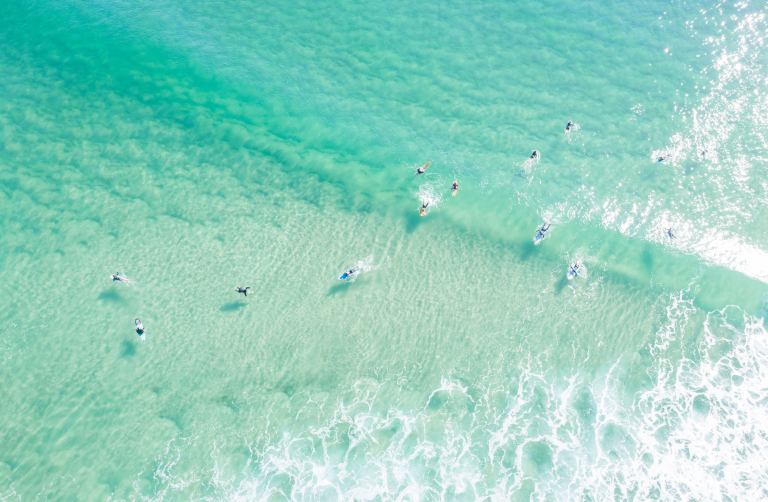
- Always swim at a patrolled beach and between the red and yellow flags - a shark alarm siren will sound if a shark is sighted at a patrolled beach.
- Don't swim too far from shore - this will isolate you.
- Swim in groups as sharks are more likely to attack an individual.
- Avoid swimming when it's dark or during twilight hours when sharks are most active
- and have a sensory advantage.
- Avoid waters with known effluents or sewage and areas that are used by
- recreational or commercial fishers.
- Avoid areas with signs of bait fish or fish feeding activity - diving seabirds are a good indicator of such activity.
- Do not rely on sightings of dolphins to indicate the absence of sharks - both often feed together on the same food.
- Exercise caution when swimming in water between sandbars or near steep drop offs - these are favourite hangouts for sharks.
- Do not swim near seal colonies. Seals are a main food source for White Pointer sharks
- Do not enter or stay in the water if bleeding. Sharks can sense blood diluted millions of times in water.
What to do if you see a shark?
- Leave the water immediately if a shark is sighted (really people, this is common sense.)
- Do not harass a shark if you see one. It may harass you back.
- When paddling or swimming away from a shark, use the smoothest stroke you can muster in the situation. Panic will attract the shark.
- Alert other people on the beach and especially the life guards if they're present so they can sound the alarm.
Thanks to these groups for invaluable Shark Info
Surfrider foundation
NSW Govt (Media Release PDF Jan 09)
SurfLifeSaving Fact Sheet on Sharks
Really want more info? Here's global map of shark attacks
It's an emergency!
If you need emergency help or witness someone who does, the phone number to dial in Australia for emergency services (Ambulance, Police and Fire) is 000.

Errr... pay attention to the signs!
Tags: dangerous animals australia, sharks, crocodiles, australia, travel safety

Comments
Add your comments