Learn Japanese with our iPhone & iPod touch application
JAPAN | Sunday, 23 November 2008 | Views [3866]

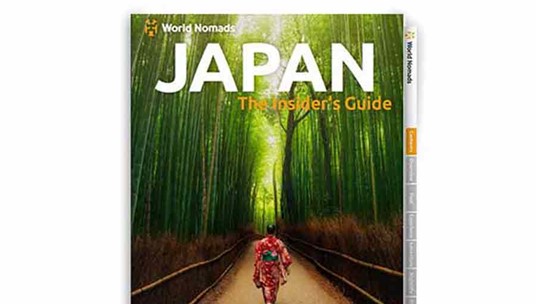
The World Nomads japanese language guide iPhone app is now available for free from the iTunes app store.

Available for free from the iTunes store, our short Japanese lesson may not teach you the entire language but contains enough of the most common travel phrases to help you keep travelling safely.

Designed for adventure travellers, the WorldNomads.com Japanese language guide contains both audio language phrases to let your iPhone do the talking and a language lesson in context to help you in conversation with the locals.
From introductions to finding accommodation, it has enough of the most common travel phrases to help keep you travelling safely.
Requirements:
- iTunes
- iPhone or iPod touch
- Requires iPhone 2.1 Software Update
Download here
Japanese Language Guide Script
For those of you keen to have a written version on the language lesson, here is the script below:
Yoshiko: Good afternoon Sir, welcome to the New York Grill.
Scott: Hello. Wow, what an amazing view! Is this where Lost in Translation was filmed?
Yoshiko: Yes, in fact we have two cocktails named after the film – the L.I.T and the Sofia, would you like to try one?
Scott: Why not?! I think the Sofia sounds like me!
Yoshiko: Is this your first time in Japan?
Scott:
Yes and Tokyo is blowing my mind – it is incredible, fast, furious,
huge, it is a true metropolis! I’ve been lost about a million times
already and I’ve only been here a few days!
Yoshiko: Even Yoshiko:s get lost, our address system is a number system rather than street names and numbers.
Scott: No wonder I can’t find anything! But, I have found that I can make a reasonable go of reading out signs and maps.
Yoshiko:
That is good, Japanese words are quite easy to pronounce as you say all
the vowels and consonants. What are you hoping to see while you are in
Tokyo?
Scott: Well, there are a few key
things on the top of my list – but first I need to learn a few Yoshiko:
phrases. Whenever I get to a new country I try to do this. I don’t
suppose you would like to help me out?
Yoshiko:
Well, it is a quiet afternoon and my supervisor is not around, I can
help you until other customers come in. My name is Yoshiko, in Japanese
you say watashi wa yoshiko des. What is your name , onamae wa?
Scott: Fantastic - thank you! watashi wa Scott des.
I’ve heard lots of people say moshi moshi is this a common greeting?
Yoshiko:
Hai - yes, it means hello, but it is only used on the phone. Depending
on what time of day it is you can also say Good Morning ohayo gozaimas,
Hello | Good Afternoon kon-nichiwa or Good Evening which is konbanwa.
Scott: So I can pretty much get by with kon-nichiwa for hello plus good afternoon and sayonara for goodbye?
Yoshiko:
Hai, that is right, but you must always be respectful. Japanese society
is very hierarchical and status is very important. You must show
respect to someone of higher status than you.
Scott: Is that why bowing is so important?
Yoshiko:
Yes, in Japan we don’t shake hands, we bow. You must always bow lower
than someone of a higher status than you, like an older person or a
teacher.
Scott: I’m so used to
sticking my hand out for a handshake, I can just see myself doing that
then remembering to bow and ending up with a weird arm out bowing
disaster!
Yoshiko: Don’t worry,
Japanese people know our language and culture are complex so as long as
you show people respect you will be forgiven for making mistakes.
Scott: Ok, so on the respect and politeness front how do I say ‘sorry’, ‘excuse me’, ‘please’ and ‘thank you’?
Yoshiko:
These will help you – sumimasen is a magic word that could cover all
these four meanings depending on the context and the tone of voice.
Other useful words are onegai shimas for please when you order
something, and aligato for thank you.
Scott: So, sumimasen onegai shimas, and thank you aligato.
Yoshiko: Hai
Scott: How do I say ok and no?
Yoshiko:
Japanese don’t really like to say no – saving face is very important
and not being able to help someone means you lose face. You will find
that Japanese won’t say no outright, but if you watch their facial
expressions and body language you will be able to figure out what they
mean. But, for the record ok is iides yo and no is kekko des.
Scott: iides yo and kekko des
Yoshiko: Can I get you another drink?
Scott:
Well, I’m pretty sure the Sofia took care of a large portion of my
daily drink budget – but I’m enjoying the lesson so how about a soft
drink now and maybe a sake a bit later.
Yoshiko: Of course, coke?
Scott:
Yes please, rather onegai shimas. Hey, I’ve heard a lot about Harajuku
and not just because of Gwen Stefani, I thought I’d go over there
tomorrow and check it out. How do I say ‘which way to’?
Yoshiko:
Harajuku is lots of fun, the girls are funny to watch and enjoy having
their photos taken – they call themselves CosPlay Girls. Harajuku is
where all the young funky people hang out and there are some quite wild
shops there! To ask ‘which way to’ say dochira des ka and “where is”
say doko des ka .
Scott: So, which
way to is dochira des ka and where is doko des ka. Speaking of wild,
I’ve heard you can get just about anything from vending machines here
in Tokyo – the weirdest things I heard were beer, rice, toilet paper,
porn, live lobsters and weirdest of all … schoolgirl panties.
Yoshiko:
Hai, Tokyo has the most vending machines of any city in the world, and
you can buy just about anything including the things you mentioned. The
panties caused quite an outrage and the men who started it were
arrested. It is quite sad really. You will see vending machines
everywhere you go and I have even heard that some tourists come here
just to see them!
Scott: Now that is almost as sad as the panties!
Yoshiko: Where are you staying?
Scott:
Well, I am actually treating myself and staying here for a night or two
but it is too expensive for me to stay here for long – how do I say
that – ‘too expensive?
Yoshiko: Too expensive is takasugilu
Scott:
Ok takasugilu. Anyway, while I’m out exploring I’m also looking for a
cheaper place to stay. How do I say ‘have you a room’, ‘how much’ and
‘may I see it’?
Yoshiko: ‘Have you a room’ is oheya aitemas ka ‘How much’ is ikula deska and ‘may I see it’ is milemas ka .
Scott: oheya aitemas ka | ikula deska | milemas ka
Yoshiko:
The cheapest accommodation in Tokyo are Capsule Hotels – you will get a
small capsule with a tv, shared bathroom and a locker, if you are here
for a bit longer you could also look into an apartment or for a totally
unique experience you could try Temple Lodging, some Buddhist temples
offer this like Mount Koya.
Scott: A
capsule hotel seems like an interesting experience and so does a Temple
Stay – I think I’ll try both of these and also maybe find an apartment
as I am here for a few weeks. If I need to book a room for just one
night how do I say things like ‘yesterday’, ‘today’, ‘tomorrow’ and
‘now’
Yoshiko: ‘today’ is kyo, ‘tomorrow’ is ashita, and ‘now’ is ima.
Scott: kyo, ashita and ima. Hey what if I don’t like something – how do I say ‘I don’t like this room’ or ‘I like this room’.
Yoshiko: You would say kono heya sukidewa alimasen for ‘I don’t like this room’, and kono heya suki des for ‘I like this room’.
Scott: Kono heya sukidewa alimasen | kono heya suki des. So I could say something like kono lesson suki des for I like this lesson?
Yoshiko: Hai.
Scott:
Now, not just to work out what kind of enormous tip I have to leave
you, but because I think I’m going to need it – can you teach me how to
count to ten?
Yoshiko: Yes, you will need to tip, oh I mean learn to count! ichi ni san shi go lok shichi hachi kyu jyu
Scott: Wow – that was fast –how do I say ‘please speak more slowly’
Yoshiko:
Hai, sorry, it was a little joke. You say yukkuli hanashite kudasai.
And the numbers are ichi ni san shi go lok shichi hachi kyu jyu .
Scott: ichi ni san shi go lok shichi hachi kyu jyu
Yoshiko: Also, regarding money - did you know that ATM machines close at 9pm?
Scott: 9pm – not 24 hours!?! Gee, I’m glad you told me, I could have got caught very short!
Yoshiko: Have you been walking around or getting the train?
Scott: So far walking, but I will need to brave the other transport options soon enough, how do I say bus, train, taxi and boat?
Yoshiko:
Bus is bas, train is densha, taxi is tak-shi and boat is booto. But
remember that the trains stop after midnight and taxi’s are very
expensive.
Scott: So, home before midnight on the bas, densha, tak-shi and booto. Oh, I know, what about ticket?
Yoshiko: Ticket is kippu. Can I get you another drink or something to eat?
Scott: Ah Yoshiko, you are very attentive, how do I say ‘you are the most beautiful woman in the room’
Yoshiko: I am the only woman in the room!
Scott: Are you?! I hadn’t noticed! And yes, a sake would be great thank you!
Yoshiko: In Japan we call sake nihon shu – sake just means an alcoholic drink. I will get you a Yoshiko: brew.
Scott:
nihon shu thank you. Although Japanese are harmonious and respectful
and I probably won’t need to use these, just in case can you tell me
how to say ‘stop thief’, ‘police’ and ‘don’t shoot’
Yoshiko: I think you’ve been reading too much manga! ‘Stop thief’ is doloboo! ‘police’ is keisatsu and ‘don’t shoot’ utsu na.
Scott: Ok, I agree that I’m looking at worst-case scenarios – but what about ‘doctor’ and ‘hospital’ what if I get sick?
Yoshiko: I hope you are insured! ‘Doctor’ is oisya san and ‘hospital’ is byoin
Scott:
Happily, I’m completely covered. Now I’ve got one last translation I
need – I get this everywhere I go as you just never know what might
happen. So, can you translate ‘Those drugs aren’t mine’
Yoshiko: You will need more than insurance if you are caught with drugs – you say watashi no dolaggu dewa alimasen
Scott: So, watashi no dolaggu dewa arimasen
Yoshiko: Scott, I’m glad that was your last request as I can see some customers coming and will have to get back to work now.
Scott: Yoshiko, the pleasure has been all mine, I think I will stay and enjoy the views and my nihonshu for a little longer.
Yoshiko: Sayonara Scott
Scott: Sayonara Yoshiko – for now!
Download Here
Further online Japanese Language Resources
JapanesePod101
Katakana Lessons
Online Japanese Lesson Resources for Students
Download Japanese Fonts
Learn Japanese Kanji
Japanese Grammar
Online Japanese Dictionary
Asahi Shimbun Newspaper
Japanese Radio
Terms & conditions
World Nomads Language Guide Podcasts are free to
download and may be used as free content on other websites so long as
no part of the podcast is changed, altered or added to in any way.
World Nomads Language Guide Podcasts may not be sold by any website or
individual. © World Nomads Pty Ltd, 2006.
Tags: free, japanese lesson, language guide, language lesson, learn japanese, iphone, ipod touch, ipod, world nomads, japanese phrases
Add your comments